
Civic Beat · June 15, 2026 · by Alan Decault
The Committee Has Seen It
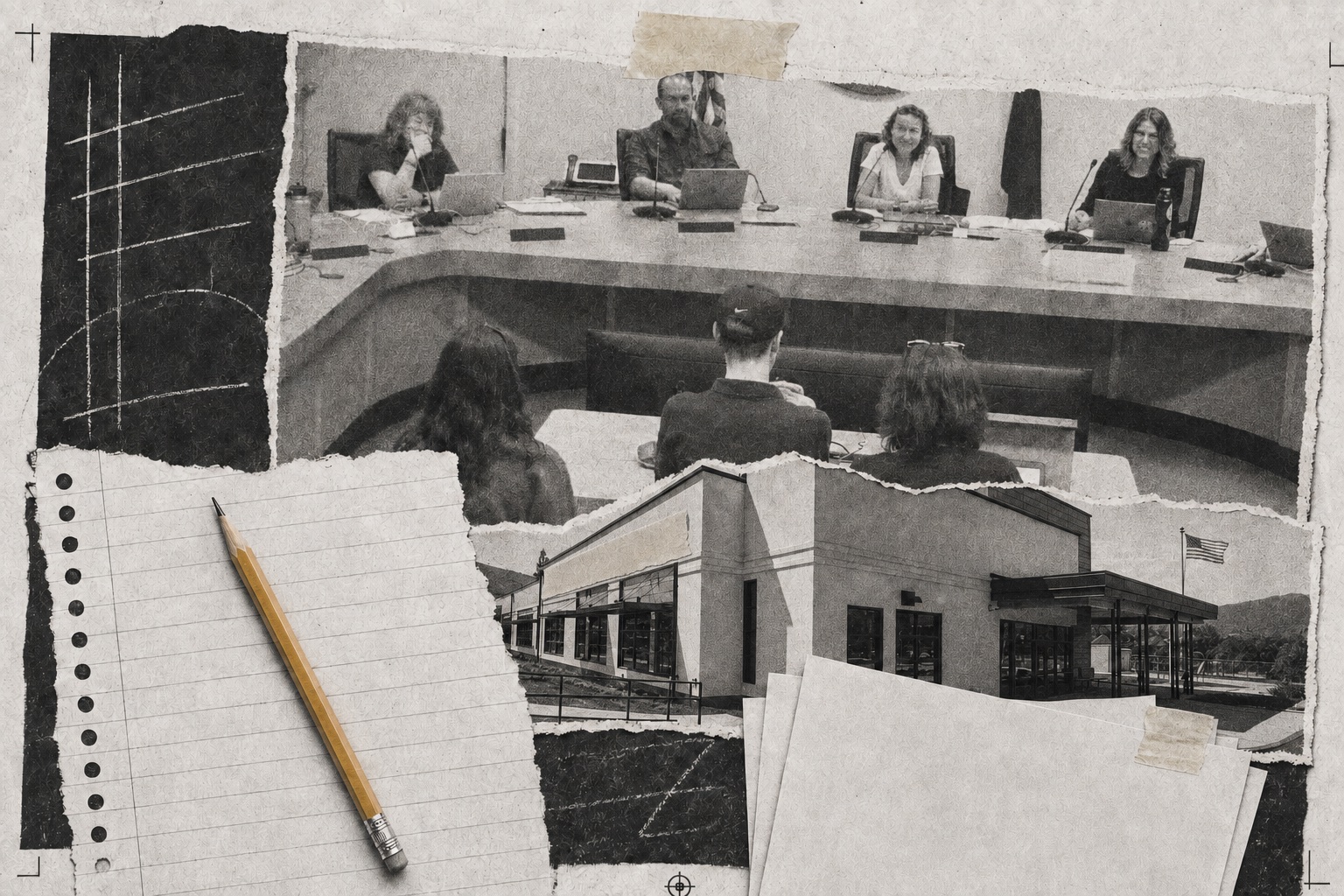
Ashland School Board · June 11, 2026 · 47m · four directors present, Ruby by Zoom · budget hearing held, no public comment.
The shortest meeting of the year, and one of the more consequential, which is the usual relationship.
The Budget Hearing
The 2026–27 budget was adopted by unanimous roll call, on Director Deltra Ferguson’s motion and Vice Chair Russell Hatch’s second. Before that vote Chair Rebecca Dyson opened a public hearing on it and asked whether anyone wished to comment.
Nobody did. The hearing lasted the length of the question.
This is not a complaint about Ashland. It is the ordinary fate of budget hearings everywhere, and the substantive argument had already happened in two budget committee meetings in May, which are also public and were also lightly attended. But it is worth recording the shape of it: the document that decides what every school in this district can do next year was opened for public objection, in a room, on a Thursday in June, and passed unopposed in under a minute.
A director offered a summary for anyone unwilling to watch the committee videos: the budget is “perfectly accurate and very, very carefully built,” required no re-appropriations this year, and was assembled “with caring and a conservative lens.” Coming after a year in which the auditor reported budgeted negative fund balances and unsigned resolutions, that is a real change and the credit was given by name.
The Committee Has Seen It
In April Superintendent Joseph Hattrick declined to publish the completed phase-one data — enrollment projections, staffing models, facility utilization — on the grounds that facts would shape the answers to the community survey. “I don’t want to hear what we do. I wanna hear what we want to be.”
On May 26 the transformation steering committee met for the first time. Thirty-eight members, plus two honorary. Its agenda, as reported to the board, included presentations from cabinet on “financial context, enrollment trends, facilities overview, so usage reports, staffing and programming.”
The superintendent’s own phrasing for what they were shown: “some data that’s still not fully on our website, but will be at some point once the surveys have been completed.”
So the position is now precise, the analysis exists. Thirty-eight community members, staff and students have been walked through it. The general public gets it after it has finished answering questions about a future it was asked to imagine without it. The community survey closes at midnight on June 28. The superintendent said the goal is for every Ashland resident to complete it.
This desk has said what it thinks of that sequence and will not repeat it every month. It will keep a count instead. Number of meetings since the phase-one analysis was completed: three. Number at which it has been published: none.
The committee’s draft purpose statement was read into the record and deserves one line of it kept, because it is the most direct language the district has used since the word was retired in February. The scenarios the committee will develop “may include but are not limited to school consolidation, school mergers, grade level reconfiguration, facility repurposing, program redesign,” and more.
Five further committee meetings are scheduled across the summer.
Two Contracts
Licensed staff. A tentative three-year agreement was reached with the teachers’ union after what the superintendent called a marathon of bargaining sessions. It comes to the board in July. Three directors observed sessions, and what they said about the tone is the sort of thing that never survives into minutes: “for the first time I felt like this was two parties working together to reach something that worked for everybody.”
Classified staff. The board approved a memorandum with OSEA Chapter 42. Three percent cost of living for each of the next two years, plus step, which the superintendent put at a combined 5.7 to roughly 6 percent next year.
The targeted parts are the interesting parts, and they are all about the kitchens:
- Food service worker, the district’s lowest wage range, moves up one range — explicitly to recruit and retain against heavy turnover.
- Cafeteria managers go to a tiered schedule. Elementary managers oversee one other person; middle and high school managers supervise several staff and serve far more meals, and are now paid accordingly.
- Several positions were found to start below the educational assistant line and end above it by step six. The district described this as “outta whack,” fixed it, and used the higher of the two lines so nobody takes a cut.
The opt-out payment for employees who decline district insurance rises from $200 to $400 for classified, matching the certified tentative agreement, and is now available to employees covered by a spouse on the district’s own plan, who were previously excluded.
The contract was rolled a year, deliberately, “so that we would not be negotiating during transformation process this next year.” Both unions are therefore off the table until the scenarios are done. Whether that is prudence or the removal of the one venue where staff could have argued about the outcome is a question this file will leave open.
The Money
Ending fund balance now projects at $3.265 million, or 7.45 percent.
The May catch-up payment from the state finally arrived: $88,000 total, about $62,000 to the general fund and $25,619 for high-cost disability. Against a $300,000 original projection. The business manager’s verdict was that at least it was not negative.
And the item nobody expected: food service will end the year with a positive fund balance. Two directors said, independently, that they had never seen it. “The narrative that I had always heard was that food service always loses money.” It does not necessarily, said the business manager, who credited the food services manager for working through her own financials with a trainer from the Willamette ESD and finding where the pinch points were.
A department that has always lost money stopped losing money because somebody was taught to read the accounts. Put that next to the audit finding from January about documentation lost to staff turnover, and a theme is forming that has nothing to do with enrollment.
On insurance, the mechanics of the October switch: the self-funded plan runs July through September, OEBB from October. The 2026–27 budget carries three months at self-funded rates and nine at OEBB rates plus a 10 percent cushion, because OEBB’s rates were not settled when the budget was built.
Odds
A four-year lease of 750 iPads at $380,000, roughly $82,000 a year, at 0.96 percent interest. The fleet is just over 800 and about half are about to age out of support. Zero percent was on the table until tariffs took it away. Devices come back at the end of the term worth $40 to $80 each against the next lease. The lease leaves about 30 percent of the technology hardware budget, some $80,000 a year, for everything else. Operations gave the credit for the interest rate to a named staffer who “played hardball.”
The high school graduated 221 students at Lithia Park, the same number who started the year as seniors. Eleven retirees were honored, representing 226 years of service between them. April Harrison’s last week as director of student services is June 22, before she becomes superintendent at Rogue River.
Directors spent the month collecting levy signs, which several of them mentioned with some feeling. The result itself was not read into the record at this meeting.
The Docket
No work session in June. Next regular meeting Thursday, July 9, 6:30, City Council chambers.
Due before then: the community transformation survey closes June 28. The licensed agreement comes to the board in July. Five steering committee meetings run through the summer. The auditors want an interim audit the week of July 6 and will start field work at the end of August.
Sourced from machine-generated closed captions of the June 11, 2026 Ashland School Board regular session. Quotations appear as transcribed, lightly conformed to natural speech, with bracketed interpolations where the repair is interpretive; directors are named from the roll and the published agenda rather than from the captions, and are identified by role where the record does not place the words with a person. Budget, wage and lease figures are as stated by staff in open session; the adopted budget is the controlling document.